how to install jmeter in windows 10 #website #load_testing

Step 1: Install Java 8
Download latest Java 8 from Oracle website. You will need to have Oracle account for downloading Java.
Run the Java installer package.
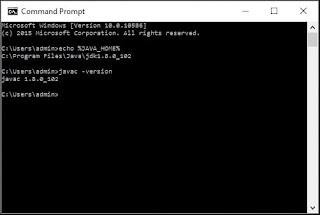
Verify installed Java version by running this command on Command Prompt.
a.    Download Java from the following link and then install.
https://www.oracle.com/technetwork/java/javase/downloads/jdk8-downloads-2133151.html
b.  Then set Java home as follows

Why do I need to set JAVA_HOME?

Many Java based programs like Tomcat require JAVA_HOME to be set as environment variable to work correctly. Please note JAVA_HOME should point to a JDK directory not a JRE one. The point of setting the environment variable is to let programs know in which directory executables like javac can be found.

1. Open Advanced System Settings

In Windows 10 press Windows key + Pause Key, This will open the System Settings window. Go to Change settings and select the Advanced tab.
Alternatively:
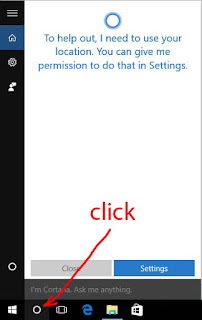
Open “Windows search” – you will find it next to the Windows logo


open Windows 10 search
1. In the search field type in – advanced system settings

2. Click on the match on top of the list

2. Set JAVA_HOME Environment variable

In “System Properties window” click “Environment Variables…”

system properties window environment variables
Under “System variables” click the “New…” button and enter JAVA_HOME as “Variable name” and the path to your Java JDK directory under “Variable value”
Add JAVA_HOME as system variable

3. Update System PATH

1. In “Environment Variables” window under “System variables” select Path
2. Click on “Edit…”
3. In “Edit environment variable” window click “New”

4. Type in  %JAVA_HOME%\bin


4. Test your configuration

Open a new command prompt and type in:
1.        echo %JAVA_HOME%
this will print out the directory JAVA_HOME points to or empty line if the environment variable is not set correctly
Now type in:
1.        javac -version
this will print out the version of the java compiler if the Path variable is set correctly or “javac is not recognized as an internal or external command…” otherwise
Step 2: Download Apache JMeter
You can download the latest version of Apache JMeter from http://jmeter.apache.org/download_jmeter.cgi

Download the Binaries zip file.

Step 3: Extract Apache JMeter
Find the downloaded zip file and extract it to your desired directory.

Now go to /bin folder. You will find jmeter.bat.
Double click on that file. The Apache JMeter GUI will be opened. You can create a shortcut for it on your desktop too.


Comments

Popular posts from this blog

upload file type rocket chat #Accepted file upload. Can not send .xlsx

Enabling File format for upload at ROCKET CHAT application/msword   - for .doc application/vnd.openxmlformats-officedocument.wordprocessingml.document   - for .docx application/vnd.ms-excel   - for xls application/vnd.openxmlformats-officedocument.spreadsheetml.sheet   - for .xlsx application/vnd.ms-powerpoint   - for .ppt application/vnd.openxmlformats-officedocument.presentationml.presentation   - for .pptx image/*,audio/*,video/*,application/zip,application/x-rar-compressed,application/pdf,text/plain,application/msword,application/vnd.openxmlformats-officedocument.wordprocessingml.document,application/vnd.ms-excel,application/vnd.openxmlformats-officedocument.spreadsheetml.sheet

Troubleshooting DRBD #Centos #DRBD

Troubleshooting DRBD  This article presents common DRBD problems and solutions. DRBD (Distributed Replicated Block Device) runs on the master and slave nodes only, and is responsible for mirroring the contents of a partition between master and slave.  Typical problems in DRBD include: A lack of Primary-Secondary connectivity The Secondary operating in standalone mode Both nodes reporting connectivity but neither one in the role of master Both nodes reporting themselves in the role of master Verify the DRBD status The following command is used to verify that DRBD is operating normally on the master and slave nodes. drbd-overview When run on the master node, the output should look like the following: 1:r0/0 Connected Primary/Secondary UpToDate/UpToDate C r----- /mnt/drbd  ... When run on the slave node, the output should look like the following: 1:r0/0 Connected Secondary/Primary UpToDate/UpToDate C r----- The following sections are exampl...

How to Add a Static TCP/IP Route to the Windows Routing Table #windows #route #add/delete

How to Add a Static TCP/IP Route to the Windows Routing Table In some specific types of environments, you might find it useful to add a static route to the routing table in Windows. Here’s how to go about it. RELATED:   How to Use Traceroute to Identify Network Problems A routing table dictates where all packets go when they leave a system—whether that system is a physical router or a PC. Most routers—including the one built into your Windows PC—use some form of dynamic routing, where the router is capable of selecting the best place to forward packets based on information it gets from other routers. You can see it at work if you use the  traceroute command  to watch the connections a packet makes as it reaches it’s final destination. Most routers also allow you to add a static route (one that doesn’t get dynamically updated) if you want to always forward certain traffic to a specific router or gateway. Why? Well, most people using Windows in t...